
WanderSearch – How it Works

When a person goes missing the family/whānau or caregiver calls New Zealand Police on 111. The police will initiate a response to locate the missing person. This is no different when using a WanderSearch device. The only difference is that the police will be able to task the deployment of the WanderSearch search equipment, which will assist with the location of the missing person..
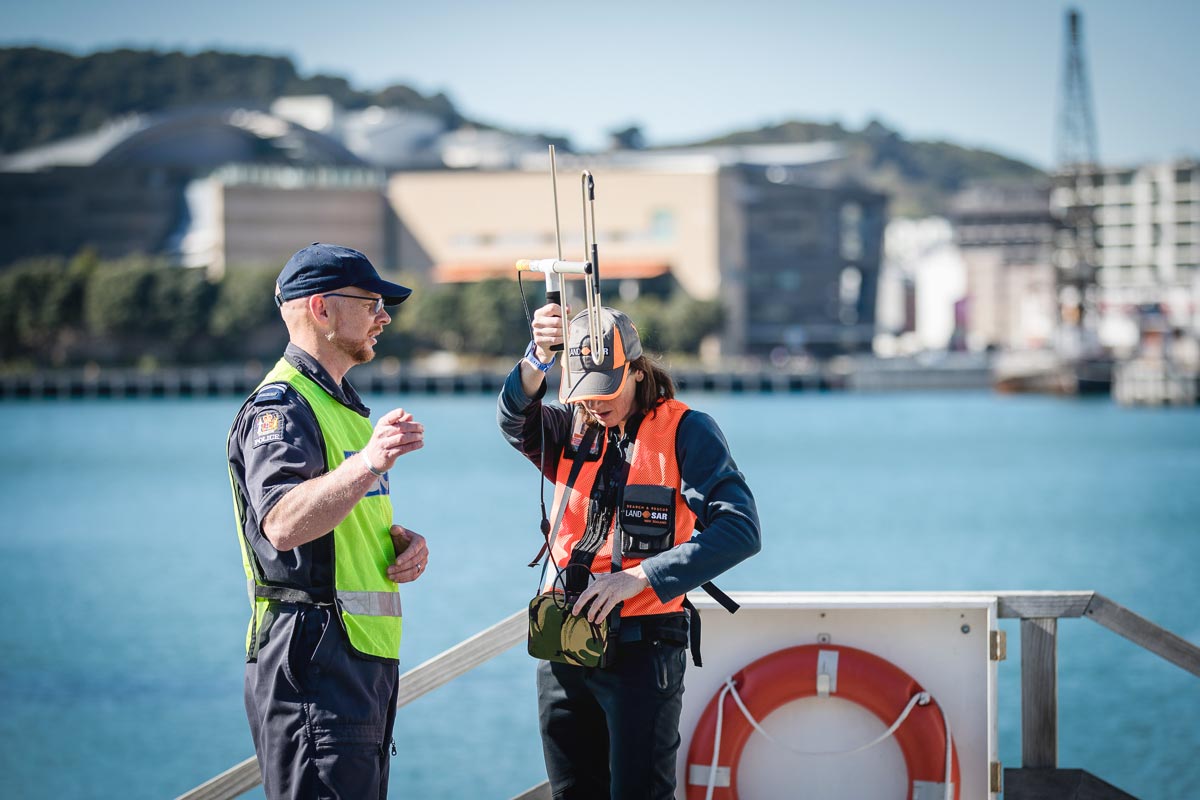
The search equipment is capable of detecting the signal from a WanderSearch device at distances up to 8 km depending on terrain and the local environment. So, if the missing person has their WanderSearch device with them they can be found more easily.
Data shows that on average a person wearing a WanderSearch is found twice as quickly as someone who is not wearing one.

For many people with a cognitive impairment who go missing the time taken to locate them can be a matter of life or death.
The longer a person is exposed to environmental hazards, including cold and wet weather, uneven surfaces causing falls and water/drowning hazards the worse is their outcome.

Equipment used
A user is provided with a small device. Each device emits a low powered radio frequency pulse. The radio frequency of the pulse is associated to the person wearing the device, making it possible to locate an individual when they go missing.
The user or caregiver can select from a pendant/necklace, wrist or keyring style device depending on the user’s lifestyle and preferences.
The devices are small enough not to be intrusive and the battery life is in excess of six months.
The devices do not have any external switches or lights and are sealed units. They can be worn in the shower. If requested, the pendant style device can be worn in such as way as to make it difficult to remove.
Why radio?
We’re often asked why a Radio Frequency device is used and not GPS or other technologies?
The WanderSearch devices are considered by some to be old technology, especially when compared to the latest wearable GPS technologies, however there are several reasons why they are still being used:
- A long battery life (they should last over six months).
- Easy and robust for people to use.
- Cannot be switched off.
- Small enough to be unobtrusive for people to wear.
- Shower proof and can be worn without taking off for six months until they need to be refurbished.
- They do not use the cell phone network and so function anywhere.
- The system does not monitor devices. The only time a person will be searched for using WanderSearch search equipment is when the police are notified that they have gone missing. This protects the privacy of the wearer.
- Signal range.
History of WanderSearch
The first use of a radio frequency device to locate a person was in the 1970s in Kaikoura by Mr Titley who reputedly developed this device for a family member who repeatedly went missing. Some thirty years later in Nelson there were numerous search and rescue operations for people with Alzheimer’s, dementia or autism. Consequently, a need was identified for a technology to help locate these people quickly. Ken Simpson of Murchison and Ian Trethowen of Waipara developed a system that was small, unobtrusive, did not require charging and could not be switched off by the user.
The devices in the form of a pendant were branded WandaTrak and designed to be “bombproof”. The first 15 devices and receiver equipment were made for Nelson and were in use in January 2006. These were generously paid for by the Nelson Host Lions, Red Cross and the Nelson-Marlborough Freemasons of New Zealand for $15,000.
Since 2006 the WanderSearch programme has been adapted across New Zealand by a range of entities, including multiple Land Search and Rescue Groups. Since 2006, the entities providing WanderSearch have received various national and local funding to allow them to continue to operate.
In 2025, New Zealand Land Search and Rescue centralised its provision of WanderSearch under its umbrella service called WanderWell. New Zealand Land Search and Rescue wanted to acknowledge that there are other technologies that exist now or in the future that may assist those at risk of getting lost. It did not want to limit its support to only WanderSearch and therefore created the WanderWell service, that can continue to provide WanderSearch alongside any future technologies to those who may need it.
WanderWell is supported by a volunteer team across the country who provide information and issue devices to those in need. Heavily reliant on grant donations, WanderWell aims to issue devices so that cost is not a barrier to access a device when needed.